

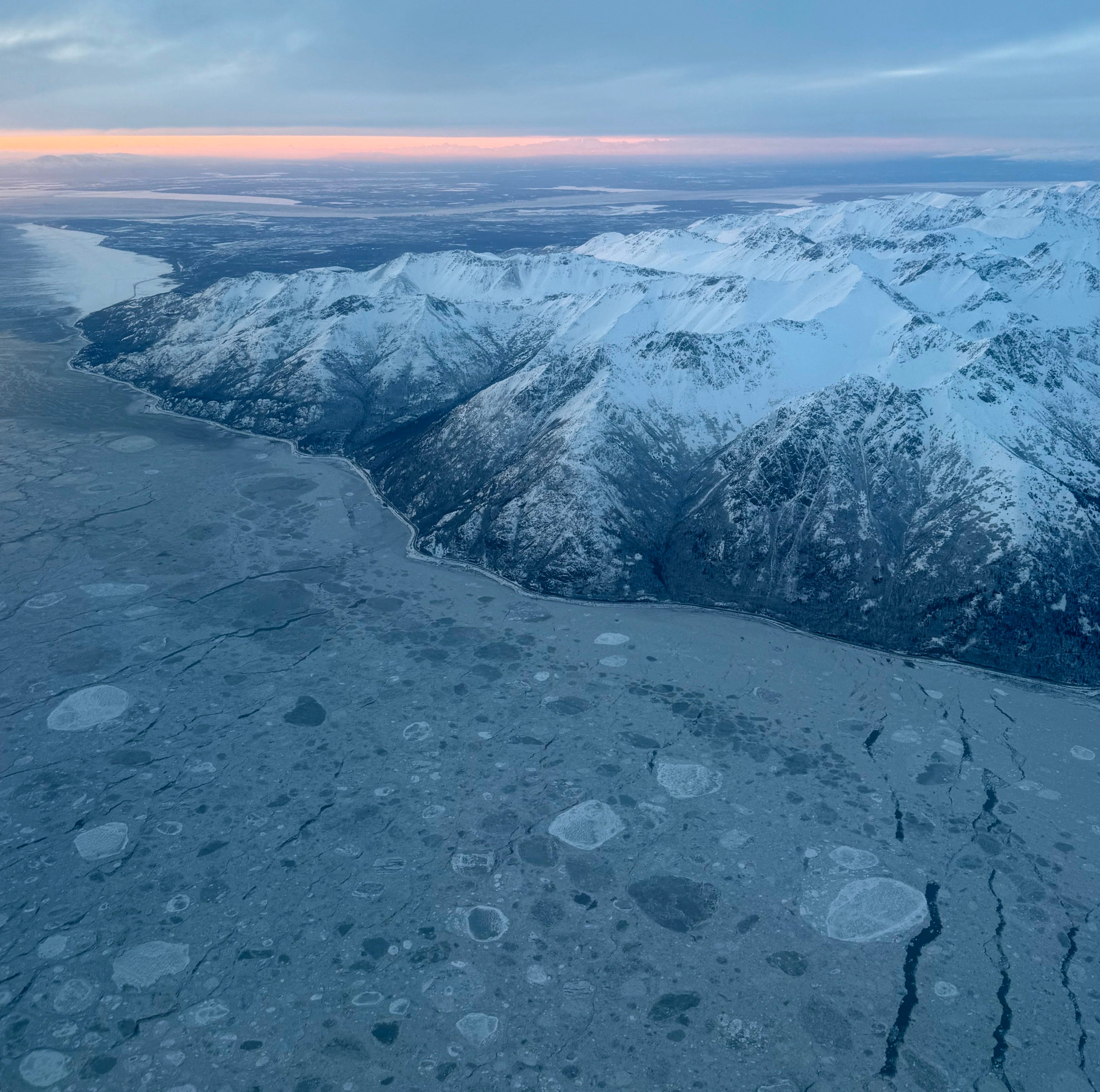
Every fall, we used to pile into a four-seat floatplane and head out west to fish, hunt, and camp for a couple of weeks. My first memories in the plane are mostly of the instrument panel. I remember it as a wall of black gauges, each with white numbers around their circumference, mounted in an endless plastic panel which filled my field of view. I tried to study them while we bounced along through the air, more from a lack of alternatives than anything else. I had no idea what each one was for, but I noticed they each seemed to have their own kind of personality.
While some had needles that swept gracefully through their range, others bounced around assertively. Many picked a number and rarely moved, holding steady, while some others tried but seemed to buzz nervously while doing so. Despite all being roughly the same size, they reported on vastly different scales. Some had numbers that ranged into the thousands and ended in nice, round zeroes while others only went from zero to one. A few reported seemingly random numbers like 12 or 220 or had no numbers at all.
Despite their differences, their common trait was absolute inscrutability to my eight-year-old self. I stared at them with a guarded mix of consternation and amazement. If the secrets of the Universe had been encoded in those little gauges, I’d have been none the wiser.1 Of course, the secrets of my immediate universe — a Cessna 180 on floats navigating Lake Clark Pass — and its ability to remain aloft were precisely what they communicated.
“Where are we right now?” my Dad asked.
The question took me by surprise. Flying with him required being able to enjoy, or at least respect, a good silence that could stretch for hours. This was hard enough for an eight-year-old to obey, but even harder to understand. I had no idea why he enjoyed flying along in silence, a serene smile on his face, continuously scanning the sky, adjusting little wheels here and little knobs there, but he did. I was always welcome to ask a question or make an observation if I had one, but the conversation generally returned to the drone of the engine and the crackle of radio chatter sooner than later.
I didn’t know how to answer his question. I had an informal knowledge of where we were, borne from our many hours in the plane together. I could recognize the water we had been over just a few minutes before — known as Tikhatnu2 — as well as the bluffs by our home on the east side the same way I could recognize the big curve and drop in the highway right before turning left on the road to our home. But after we crossed the water and entered the mountains, I lost my way. Since my vision was limited to the dashboard and what little I could see out the small window to my right, it was hard to say with any certainty which slice of mountain was which.
“I ... don’t know,” I answered truthfully.
“Well, what would you do if I had a heart attack up here and couldn’t fly?” he asked pointedly. This question seemed unrelated to the first, yet concerned me deeply.
“I’d probably crash and die,” I replied, yet again truthfully.
He looked at me like I was insane. This was not the answer he was looking for.
“Point to where we are on the map,” he commanded, handing me a folded chart. I opened it up and the wall of gauges spanning my vision was replaced by a stunning sea of green, tan, and blue. Dashed magenta lines and transparent magenta clouds layered on top. I noticed that each magenta cloud had a little black nucleus, next to which word were printed. I recognized some as the names of town, which felt helpful, until I remembered that the majority of Alaska didn’t contain any town. We could have been any distance and any direction from whatever dot I happened to recognize.
“Look out your window, find a landmark,” my Dad offered.
I scanned the ground outside the right side window, trying to see around the pontoon that blocked much of my view. I saw a continuous row of snowcapped mountains at eye level which descended to a thin river running through lush flatlands. I knew we’d just crossed the Inlet, and, by dumb luck, I’d found Kenai, the town nearest to where we’d taken off from that morning, printed next to one of the little black dots on the chart. I tried to put it all together and found a spot on the map that roughly matched these criteria, vague as they were.
“I think we’re right here,” I said, poking the map with my pointer finger.
“Close,” my Dad said charitably, “We’re actually here,” and he tapped the chart a few inches, or more than one hundred miles, further up the coastline.
Whew, I thought, disaster averted. I feared that I might have been made to guess blindly until I eventually got it right. I’d experienced that during previous lessons in math or mechanics where the answer had been obvious to him but meant nothing to me. Assuming that my training in navigation was complete, I handed the chart back to him so I might retreat to the safety of our shared silence.
Some time later, I noticed that the fierce mountains outside my window had taken on a far more sinister look. Black, jagged, and so razor sharp they had no snow cap. They looked less like mountains and more like the lower jaw of an ancient monster. I looked over at my Dad to gauge his reaction and noticed that he, too, had a row of fangs looming out his side window. We were fenced in, nestled among them.
Sensing my sudden attention to our surroundings, he asked, “So, where are we now?”
I’m not off the hook, after all, I thought.
I took the chart back and searched frantically for the spot where we’d agreed we had been before. I wanted to be able to point to just the right spot, then trace my finger up, effortlessly, to ... well, wherever we had made it to. Instead I just kept staring.
“Remember, we were right here before,” he said, tapping a spot nowhere near where I had been scanning.
“We need to turn north out of this pass toward Lake Telequana, which is up here,” he continued as he slid his finger up the map, “I want you to tell me where to turn.”
There were only a few inches between where we’d been and where we were going. My confidence skyrocketed; he’d narrowed down the search area considerably. I got ready to start guessing.
“The only thing is,” he continued conversationally, “we have to pick which two mountains to fly between. If we choose wrong, we’ll end up in a false pass.”
“What’s a false pass?”
“It’s an opening between the mountains that looks like a break in the range. But instead you find yourself face to face with a peak that rises up faster than we can climb in a valley too narrow to turn around in. It’s a literal dead end.”
I tried to play it cool and keep my composure while the thought, “He’s gonna let a kid decide this?!” screamed at maximum volume inside my skull.
I tried to remember the lesson he’d taught me only an half hour earlier, but it had gone in one ear and right out the other. Except one thing: Landmarks! I needed to find a landmark.
I looked out my little window and remembered the small river flowing beneath us. I looked at the sectional, in the rough area he’d pointed to before. Alas, it was lousy with rivers.
“I just need to know if this is place where we turn or not,” he said, as if we were driving down a shaded country lane looking for a place to picnic, rather than flying through what I saw as a greedy maw determined to swallow us whole.
My vision bounced from the hungry mountains, back to the river below, and back up to the mountains again. Approaching on the right, my side, there was an opening between sharp teeth. That had to be it. He wouldn’t set me up.
“That’s the turn, right up there, where there’s a break in the mountains,” I said relieved to have come up with some solution.
“Are you sure?” he asked.
“No, of course I’m not sure!” I screamed in my head, while sitting in placid silence.
He reached back over, to the open sectional, and traced his fingers along a path.
“We’re looking for the opening where this little lake sits just off the river,” he explained.
I didn’t realize the map had that much detail but, as I looked closer, I saw that the rivers I’d classified in bulk were actually quite different. They bent and wound, braided and widened, split and recombined. They weren’t just cartoon lines on a page, even these drawings contained clues. The river by the lake was wide. Wide enough, in fact, that little sandbar islands were drawn in it.
Looking out my window, past the pontoon, I felt that the little river below couldn’t possibly be that wider one on the sectional. There was no room for islands.
“This isn’t the turn,” I decided out loud, “the river isn’t wide enough, and I can’t see any tiny lake on my side.”
“Good,” he said.
We returned to our silence. The illusion of surety is a tempting one. Many of us are so uncomfortable holding uncertainty that we sprint toward resolution, any resolution. We do this especially when we have poor data, and we seem to only accelerate along with the stakes.
It would be many more years until I understood that part of the lesson, though. For the moment, I pressed my face against the glass of my passenger window and watched as our once dangerous false pass slid benignly by.
As I get older, I become surer that the secrets of the Universe are really are broadcast to us just like this, obvious yet enigmatic, waiting for us to interpret and act upon them.
Known by the western name of Cook Inlet.